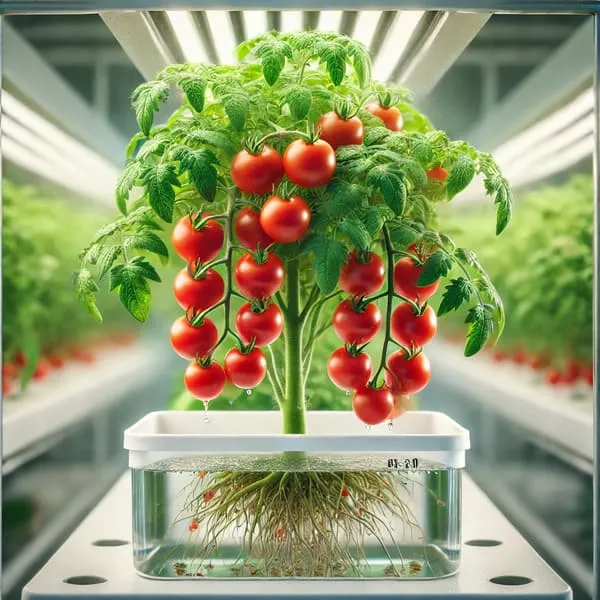
How to Grow Hydroponic Melons
(From Setup to Harvest)

Can You Grow Melons Hydroponically?
Yes—cantaloupe/muskmelon, galia, and honeydew adapt well to hydroponics when you give them ample root volume, steady aeration, strong light, vertical trellising, and reliable hand-pollination.
Compact or personal-size cultivars perform best. The main hurdles are root heat in summer, nutrient demand during fruit fill, and supporting the fruit on trellis.
H2: 📝 Quick Overview
| Topic | Best practice (at a glance) |
|---|---|
| Best systems | Drip/Dutch bucket (10–20 L per plant) for simplicity and drainage; RDWC/DWC works if you can keep solution 18–22 °C and highly aerated; ebb & flow (flood & drain) also good with chunky media. Avoid tight NFT channels (roots get massive). |
| Variety pick | Choose compact/personal-size melons (e.g., Charentais, Sugar Cube, Galia types, small honeydew). Aim for vines that set quality fruit with fewer nodes. |
| Media | Inert, fast-draining: expanded clay (hydroton), perlite mixes, or coco–perlite blends (60–80% chunky component). Keep crowns above constantly wet zones. |
| Container / spacing | 1 plant per 10–20 L bucket (4–5 gal); space 40–60 cm between plants on a trellis lane. Larger root volume = steadier EC, better fruit size. |
| pH & EC | pH 5.8–6.2. EC 1.4–1.8 mS/cm vegetative; 1.8–2.4 mS/cm from first flowers through fruit fill. Watch uptake: melons pull K and Ca hard during bulking. |
| Nutrients (focus) | Early veg: balanced N. Flower/fruit: boost K (and Mg), moderate N, ensure Ca availability (tip burn/ber issues). Change or top-off to keep EC stable as fruits swell. |
| Water temp & O₂ | 18–22 °C solution; strong aeration (air stones or venturi). In hot climates, bury or shade reservoirs; insulate lines. |
| Light target | Indoors: PPFD ~400–700 µmol·m⁻²·s⁻¹, 14–16 h; Greenhouse/sun: DLI ~20–30 mol·m⁻²·d⁻¹. Fruit set and flavor improve with higher, consistent light. |
| Temp & RH | Day 24–30 °C, night 18–22 °C. RH 50–65% (lean drier during flowering to help pollen). Ensure airflow to limit foliar disease. |
| Training & trellis | Vertical netting 2–2.5 m high; run 1–2 leaders, prune excess laterals. After fruit set, limit to 1–2 fruits per vine for size/quality; use fruit slings. |
| Pollination | Manual pollination indoors: transfer pollen from male to female flowers (female has mini fruit at base) mid-morning when blooms are open. |
| Irrigation rhythm | Drip: frequent short pulses that fully wet then drain (avoid constant saturation at crown). Ebb & flow: brief floods, full drainage. DWC/RDWC: continuous aeration, watch heat. |
| Timeline (typical) | Germination 3–7 d → Transplant 2–3 wk → First flowers 4–6 wk after transplant → Fruit maturity 35–50 d after pollination (≈ 70–95 d seed-to-harvest, cultivar dependent). |
| Yield target | 1–3 fruits/plant typical indoors (0.8–2.5 kg each depending on cultivar and load). Fewer fruits = bigger, sweeter melons. |
| Ripeness cues (cantaloupe/muskmelon) | Strong aroma; full netting; rind shifts from green to tan; “full slip” (fruit detaches easily). Honeydew/galia: waxier feel, color change, blossom-end aroma; no true slip—use °Brix and days-after-pollination. |
| Heat management | Shade/insulate reservoirs, run night irrigations in hot spells, consider RDWC recirculation to buffer temp swings. |
| Common pitfalls | Overcrowding roots (EC swings); poor pollination (small/aborted fruit); nutrient heat stress in summer; letting too many fruits set (everything stays small). |
| Field note (internal experience) | Growers report Dutch buckets outperform NFT for big roots; burying the reservoir or switching to RDWC helps keep summer solution temps stable; limit fruit load for size and flavor. |
🌱 How to Grow Hydroponic Melons (Step by Step)
1) Choosing the Best Melon Variety
- Plan fruit load: Indoors, expect 1–3 fruits/plant. Fewer fruits = larger, sweeter melons.
- Go compact/personal-size. Small cantaloupe/muskmelon, galia, and honeydew types finish faster, set reliably indoors, and size up with fewer nodes.
- Early, netted types (personal-size Charentais/galia styles) are the most forgiving for first runs.
2) Best Hydroponic System for Melons
- Drip to bucket (Dutch-bucket style): Most forgiving for big roots; great drainage; easy to scale and service.
→ Drip system - Ebb & Flow (Flood & Drain): Brief floods + full drains keep roots oxygenated; pair with chunky media.
→ Ebb & Flow - DWC / RDWC: Excellent vigor if you keep solution 18–22 °C and heavily aerated; RDWC buffers heat/EC swings better.
→ DWC
→ RDWC - NFT: Not recommended—melon roots get massive and can choke channels.
→ NFT (for reference)
Quick pick: If you want the easiest path to sweet, consistent fruit indoors, use drip to 10–20 L buckets on a trellis.
3) Substrate & Container Setup
- Container volume: 10–20 L (4–5 gal) per plant minimum. More volume = steadier EC and better fruit fill.
- Media (very free-draining):
- 100% expanded clay (hydroton), or
- 60–80% hydroton/perlite with 20–40% coco chips for moisture buffering.
- Planting: 1 plant per bucket; keep the crown slightly above the consistently wet zone to avoid stem rot.
- Spacing & support: 40–60 cm (16–24″) between plants on a 2–2.5 m vertical trellis. Use fruit slings once fruits swell.
- Irrigation pattern (drip/ebb): Short, frequent events that fully wet and then fully drain. Avoid constant saturation.
4) Lighting & Temperature (Sun vs LED)
- Indoors (LED): PPFD ~400–700 µmol·m⁻²·s⁻¹ for 14–16 h/day (DLI ~20–30). Keep fixtures 30–45 cm above canopy; increase intensity during fruit fill.
- Greenhouse/full sun: Target similar DLI; add afternoon shade if heat index spikes.
- Air & climate: Day 24–30 °C (75–86 °F); night 18–22 °C (64–72 °F); RH 50–65% (slightly drier during flowering). Maintain steady airflow to limit disease and help pollen shed.
- Solution heat control: Shade or bury the reservoir, insulate lines, and consider night irrigations during heat waves.
5) Nutrients & pH/EC Control
- pH: 5.8–6.2 throughout.
- EC targets:
- Vegetative / early vining: 1.4–1.8 mS/cm
- From first flowers → fruit fill: 1.8–2.4 mS/cm (watch tips; back off if burn shows)
- Macros:
- Veg: balanced NPK.
- Flower/fruit: boost K and Mg, moderate N, and ensure Ca (prevents blossom-end issues and helps firmness).
- Top-up discipline: Top with plain water between changes to control EC creep; do full changes on a 7–14 day cadence (faster in hot weather).
- Reservoir hygiene: Keep light-proof, high aeration, and solution 18–22 °C for strong uptake.
6) Pollination & Trellising (the part that makes or breaks yield)
Manual pollination (indoors)
- Identify male flowers (plain bloom) and female flowers (mini-fruit under the bloom).
- Mid-morning on fresh blooms, brush pollen from the male onto the female stigma. Repeat across flowers.
- Tag the pollinated node with date; expect fruit sizing within days.
Training & fruit load
- Hang fruits in soft slings to prevent stem tearing and to improve shape.
- Run 1–2 leaders up the trellis; prune excessive laterals to keep airflow.
- Once fruits set, limit to 1–2 fruits per vine for size and sweetness; remove extra sets and pinch tips beyond the last fruit to focus energy.
7) Maintenance & Growth Timeline
Daily / every other day
- Check pH/EC, reservoir level, and solution temp (aim 18–22 °C).
- Confirm drainage and airflow; inspect leaves for heat stress or mildew.
- Train leaders and tuck tendrils onto the net.
Weekly
- Prune excess laterals; thin crowded leaves for airflow.
- Adjust fruit slings as melons swell.
- In drip/E&F, verify emitters and drains aren’t salt crusted; in DWC/RDWC, confirm vigorous aeration.
Every 7–14 days
- Reservoir change (faster in hot spells). Re-target EC for the current phase.
Typical timeline (personal-size cantaloupe/galia)
- Week 0: Seed or transplant.
- Week 2–3: Transplant to final buckets (if started small).
- Week 4–6: First flowers; begin manual pollination.
- + 35–50 days after pollination: Harvest window (cultivar dependent).
- Cantaloupe/muskmelon: strong aroma, full netting, rind turns tan; full/slip when ripe.
- Galia/honeydew: no true slip; look for color change, waxy rind feel, blossom-end aroma; confirm by days-after-pollination and °Brix if you measure.
End-of-cycle
- Clear vines and deep-clean buckets/lines. If reusing media, rinse thoroughly and sterilize; otherwise replace with fresh chunky media for the next run.
Field-tested notes you can bank on
- Big roots love drip/Dutch buckets; NFT chokes quickly.
- In summer, reservoir heat is the silent yield-killer—shade/bury or switch to RDWC to buffer temps.
- Indoors, 1–2 fruits per vine consistently beats “more fruit” attempts for size, sweetness, and turnaround time.
🛑 Common Problems & Fixes
| Problem | How it shows | Likely cause | Fix (what works) |
|---|---|---|---|
| Flowers drop / no fruit set | Female flowers abort; tiny fruit yellows and falls | Poor pollination, high RH, low airflow | Hand-pollinate mid-morning (male → female), lower RH to 50–60%, add gentle airflow; repeat for 2–3 days of bloom. |
| Small fruit / many aborts | Vines keep growing but fruit stays marble-size | Too many fruits set at once; plant energy diluted | Limit to 1–2 fruits per vine; prune excess laterals; pinch tips beyond last fruit to focus carbohydrates. |
| Fruit stays bland / low °Brix | Pretty fruit, weak aroma/flavor | Too many fruits; low light; EC too low during fill | Hold 1–2 fruits/vine, increase DLI (or sun hours), run EC ~1.8–2.4 during fruit fill; keep solution cool for uptake. |
| Leaf scorch / midday wilt | Curling, crispy margins, poor set | Heat stress; hot nutrient solution; low O₂ | Shade/insulate or bury the reservoir; keep solution 18–22 °C with strong aeration; add night irrigations in heat waves. |
| Tip burn / marginal burn | Brown tips on new leaves | EC too high; K/Ca imbalance; salt crusting | Drop EC by 0.2–0.4; ensure Ca/Mg availability; flush or full change; avoid constant media saturation. |
| Powdery mildew indoors | White powder on leaves, spreads fast | Dense canopy, high RH, poor airflow | Thin leaves for airflow; hold RH ≤65%; improve circulation; remove worst leaves; keep foliage dry at night. |
| Stem/base rot | Dark, mushy crown; sudden collapse | Crown sitting in constantly wet media | Plant crown above wet zone; shorten flood/pulse; increase drainage; add top hydroton layer to dry the surface. |
| EC swings / lockout | Burn + pale growth alternation | Small res vs. big plant; hot res; irregular top-ups | Upsize reservoir; top with water between changes; weekly/biweekly full changes; stabilize temp. |
| Root browning / slime | Tea-colored roots, sulfur smell | Warm, low-O₂ solution; biofilm | More aeration; cool the res; light-proof lines; sanitize and reset with full change; brief H₂O₂ shock if needed. |
| Fruit splitting / misshapen | Cracks at rind; odd shapes | Irregular moisture; late EC jumps; poor pollination | Keep irrigation steady; avoid EC spikes late; ensure full pollination; sling fruit to avoid pressure points. |
🎥 🎥 Recommended Videos for Growing Hydroponic Melons
Simple melon hydroponics with the DFT system using PVC pipes || Hydroponic farming at home
Answering Questions About Growing Melons In Hydroponics
Hydroponic Cantaloupe
❓ FAQs About Hydroponic Melons
Yes. Choose compact cultivars (personal-size cantaloupe/galia/honeydew), train vertically, hand-pollinate, and manage heat and root volume.
Drip to Dutch buckets (10–20 L) is the most forgiving. Ebb & Flow also works with chunky media. RDWC/DWC is great if you keep solution 18–22 °C and very aerated. Avoid tight NFT—roots get massive and clog channels.
For a single plant in a deep, light-proof bucket, yes. Refresh solution at first bloom, maintain a generous air gap, and sling the fruit. For multiple plants or summer heat, active aeration/recirculation is more stable.
pH 5.8–6.2. EC 1.4–1.8 in veg, 1.8–2.4 from first flowers through fruit fill. If tips burn, back off 0.2–0.4; if fruit stalls, you may be underfeeding.
Identify male flowers (no fruit at base) and female (tiny melon beneath). Mid-morning, use a small brush to transfer pollen from male anthers to the female stigma. Repeat on fresh blooms for 2–3 days.
Indoors: 1–2 fruits per vine. More fruits = smaller, blander melons and heavy nutrient use.
Aim PPFD ~400–700 µmol·m⁻²·s⁻¹ for 14–16 h (DLI ~20–30). Increase intensity during fruit fill; keep fixtures ~30–45 cm above canopy.
- Cantaloupe/muskmelon: strong aroma, full netting, rind turns tan, full slip (fruit detaches easily).
- Galia/honeydew: no true slip—look for color shift, waxy feel, blossom-end aroma; use days after pollination (35–50 d) and °Brix if you measure.
Shade/insulate or bury the tank, increase aeration, run night irrigations, and consider RDWC to buffer temperature swings.
Shift from vegetative balance to higher K and Mg with moderate N, and ensure Ca for firmness and to reduce disorders. Top up with water between changes to prevent EC creep.
Weekly. Train 1–2 leaders, remove excess laterals, and once fruit sets, pinch growing tips beyond the last fruit to push energy into sizing and sweetness.
🌟 Final Thoughts
Hydroponic melons are absolutely doable—and delicious—when you:
- give big roots big volume (buckets over channels),
- lock pH 5.8–6.2 and run EC 1.8–2.4 during fruit fill,
- control heat (solution 18–22 °C),
- hand-pollinate consistently, and
- limit fruits to 1–2 per vine with steady light and airflow.
Dial those five levers and you’ll move from “vines everywhere” to heavy, aromatic melons on schedule.