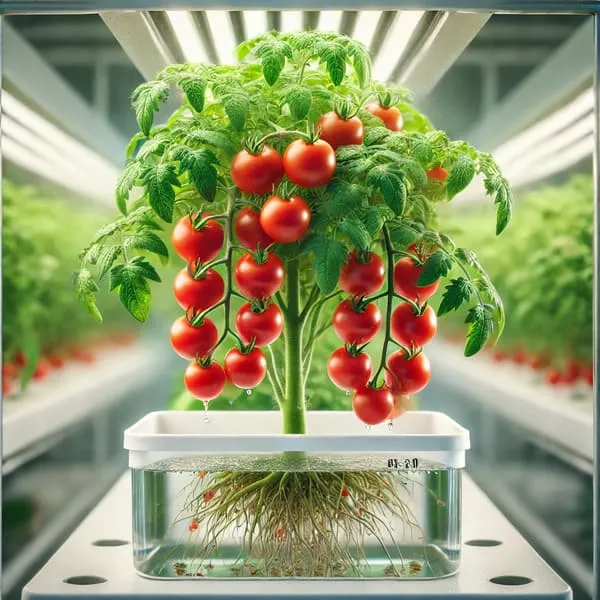
Kratky Method
Passive DWC Hydroponics for Low-Maintenance Growing
The Kratky method is a passive hydroponic system that eliminates the need for pumps, electricity, or moving parts. It is a variation of Deep Water Culture (DWC) but operates without an air pump, making it one of the simplest and most beginner-friendly hydroponic methods.
Instead of continuously aerating the nutrient solution, the Kratky system relies on a static water reservoir where plant roots gradually absorb nutrients while an air gap forms naturally, supplying the necessary oxygen.
🔬 How Does the Kratky Method Work?

1️�?� Setting Up the Reservoir. A container or bucket is filled with a nutrient solution. The water level initially reaches the plant’s net pot, allowing roots to access nutrients directly.
2️�?� Plant Growth & Oxygenation. As plants consume water, the nutrient level gradually decreases. An air gap naturally forms, exposing roots to oxygen.
3️�?� Nutrient Absorption. The roots extend into the remaining nutrient solution, ensuring continuous feeding. No external aeration is needed, as the plant self-regulates oxygen uptake.
🚀 Result: A fully passive hydroponic system that requires minimal intervention while providing consistent plant growth.
🛠️ How to Build a Kratky System (Step-by-Step Guide)
Step 1: Gather Your Materials
🔹 Container or Bucket: Any non-transparent bucket, tote, or jar (to prevent algae growth).
🔹 Net Pot & Growing Medium: Clay pebbles or Rockwool to support plant roots.
🔹 Hydroponic Nutrients: A balanced liquid fertilizer suited for hydroponic use.
🔹 pH Testing Kit: Ensures nutrient solution is within 5.5 - 6.5 pH range.
Step 2: Prepare the Nutrient Solution
🔹 Fill the container with nutrient-rich water, ensuring it reaches the bottom of the net pot.
🔹 Adjust pH levels for optimal nutrient absorption.
Step 3: Insert the Plant & Monitor Growth
🔹 Place a seedling or cutting into the net pot, ensuring roots touch the nutrient solution.
🔹 As plants grow, the water level naturally lowers, creating an oxygen-rich zone.
Step 4: Refill When Necessary
🔹 Once the nutrient level is nearly depleted, refill with fresh hydroponic solution or harvest your plants.
🌱 Best Plants for Kratky Hydroponics
| Plant Type | Why It Works Well in Kratky |
|---|---|
| Leafy Greens (Lettuce, Spinach, Kale, Arugula, Swiss Chard) | Fast-growing, require minimal nutrients |
| Herbs (Basil, Cilantro, Parsley, Mint, Chives, Oregano, Thyme) | Thrive in passive systems, no aeration needed |
| Strawberries | Grow well with stable water levels |
| Peppers & Tomatoes (Dwarf Varieties) | Possible but require larger reservoirs |
🔎 Kratky vs. DWC: What’s the Difference?
| Feature | Kratky Method | Traditional DWC |
|---|---|---|
| Oxygenation | Passive air gap formation | Requires air pump & stone |
| Nutrient Circulation | Stagnant, gradually absorbed | Continuous circulation |
| Maintenance | 🚀 Low – No moving parts | 🔧 Moderate – Requires pumps & aeration |
| Electricity Use | ❌ None | ✅ Requires power for aeration |
| Best For | Small, passive setups | High-yield, fast-growing plants |
🚀 Why Choose Kratky Hydroponics?
✔ No Electricity Required – Perfect for off-grid growing.
✔ Low Maintenance – No pumps, timers, or aerators needed.
✔ Beginner-Friendly – Simple setup with minimal monitoring.
✔ Great for Small Spaces – Ideal for indoor and outdoor use.
Pros & Cons of the Kratky Method
✔ Pros:
✅ Electricity-Free Growing – No need for pumps or timers.
✅ Low-Cost & Beginner-Friendly – Simple setup with minimal investment.
✅ Low Maintenance – Requires little monitoring once set up.
✅ Great for Off-Grid Gardening – Perfect for remote areas or sustainable growing.
❌ Cons:
⚠️ Limited Scalability – Not ideal for large-scale hydroponics.
⚠️ Water Depletion Risk – Requires occasional refilling to prevent drying out.
⚠️ Not Ideal for High-Consumption Crops – Large plants need more oxygen than passive aeration provides.
🚀 Is Kratky Hydroponics Right for You?
The Kratky method is an excellent choice for beginners or anyone seeking a low-maintenance hydroponic system. While it lacks automation and scalability, it is ideal for small indoor setups, balconies, and off-grid gardening.
🔎 Want to expand your hydroponic knowledge? Explore our guides on DWC, NFT, Ebb & Flow, and Drip Irrigation to find the perfect system for your growing needs.